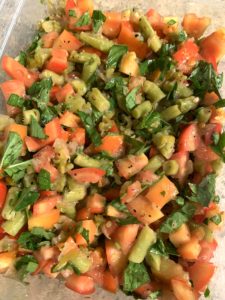
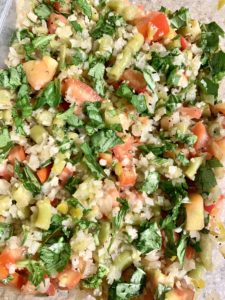
Black pepper, red pepper flakes, chives, breakfast sausage
Preheat your oven to 375°F
(If you choose to do crustless, spray bottom on dish so mixture doesn’t stick.)
Press the pie crust into a 9-inch pie dish, (or 8×8 dish) pressing it gently into the bottom and sides. Trim any excess crust hanging over the edges. If using a store-bought crust, follow package instructions for pre-baking if required.
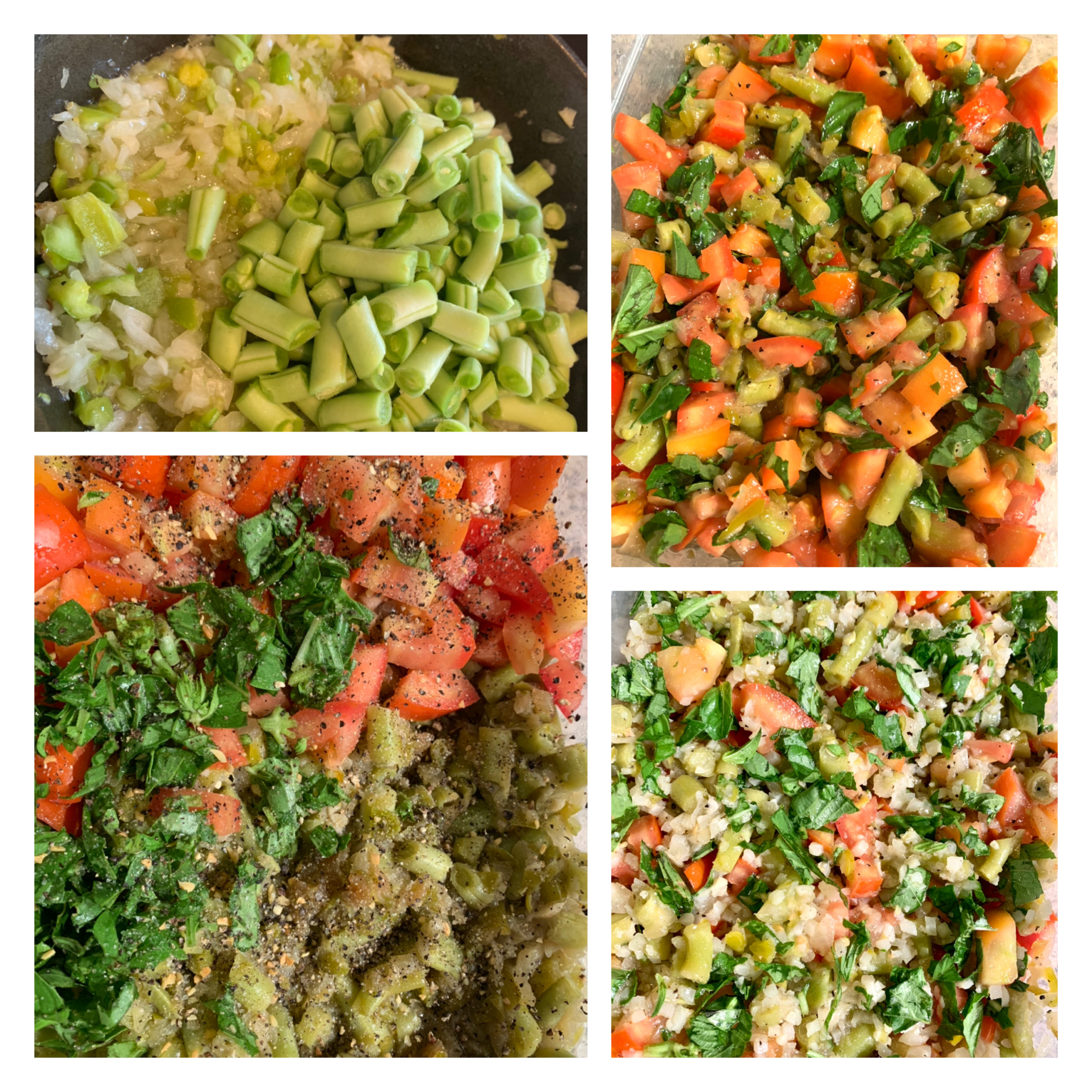
Peel and shred carrot. Dice onions, garlic, mushrooms & peppers.
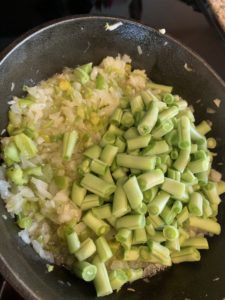
Heat avocado oil in a skillet over medium heat. Sauté the vegetables until tender, about 5-7 minutes. Steam mushrooms in a different pan and rinse when cooked. Allow to cool slightly. If adding meat, make sure it’s cooked and crumbled/diced.
In a separate bowl, whisk together the eggs, coconut cream, salt & pepper.
Assemble:
Spread the cooked vegetables (and meat) evenly over the bottom of the pie crust. Sprinkle the shredded cheese on top.
Pour the egg mixture over the cheese and veggies ensuring even distribution.
Bake in the preheated oven for 30-40 minutes, or until the quiche is set in the center and lightly golden on top. A knife inserted into the center should come out clean.
Allow the quiche to cool for 10 minutes before slicing. This helps to make for cleaner slices
General guidelines and suggestions for youth girl athletes in Soccer.
I know you hear a lot of terms, so let’s define a few of them to help you understand the importance of water and food in your sports performance and growth.
Soccer players tend to have a high sodium sweat rate. Although sweat is primarily comprised of water, it contains a number of electrolytes. Sodium and chloride are the most common electrolytes lost during sweat, which can cause an imbalances that impair performance.
Electrolytes such as potassium, sodium, magnesium, & calcium are needed in order to maintain fluid balance, turn nutrients into energy, support muscle control and nerve function, heart rhythm and blood pressure. These salts and minerals help conduct electrical impulses throughout the body, and help transport nutrients to the cell and help waste eliminate waste.
The body is 60% water. Adequate water intake is responsible for maintaining optimal blood volume. Insufficient water lost through sweat can lead to decreases blood volume, which reduces the blood flow to your muscles and increases core body temperature.
With just a 2% decrease dehydration can influence cognitive function and skill, execution, & exercise performance. Thirst, headaches and negative mood states may distract from the task at hand and impair performance like reductions in reaction speed, memory, decision making, on and off the field.
Good hydration begins with exercise in a state of euhydration, prevents dehydration during exercise and replaces fluid loss following exercise.
These numbers can change based on the environment conditions you are preforming in, intensity, your sweat volume and duration of exercise itself.
Recommended daily water intake:
I have included some charts for you to look at since you all are individual. It may help you decide how much water you should be drinking. Let’s start with at least half your body weight in ounces as a guide.
Water during exercise:
Drink 8oz before exercise. Drink 8oz for every 30 minutes of exercise. Drink 8oz at cool down of exercise.
Fluid after exercise:
Athlete should consume 150% of total fluid losses during exercise to restore fluid balance. The addition of sodium to this fluid is also important. Total loss=sweat & urine.
Consuming a sodium rich meal or drink prior to exercise is a useful strategy as well as following exercise. Broth and soups provide a lot of water and other important nutrients such as electrolytes. Animal derived bone broth also provide collagen, which helps with tissue repair and joint health. Smoothies are highly customizable way to get fluids into your body. You can add protein powder or yogurt to get extra protein. Make it with water or a nut milk (i.e. almond or coconut.)
You can fulfill 15-20% of your daily water requirements through foods! So if you don’t think you can increase water consumption these are some fruits and vegetables and foods to incorporate during the day and before/after practice.
Foods highest in Potassium: 2300mg recommended daily
Avocado 975mg, 1/2 cup apricots 755mg, pear 333mg, mango 323mg, banana 400mg, 1 cup beets 1300mg, 1 cup swiss chard 960mg, Lima beans 955mg, 2 cups spinach 335mg, 1 cup sweet potato 542mg, watermelon 1 cup 640mg.
Foods highest in calcium: 1300mg recommended daily
1 cup Bok choy 158 mg, collard greens 268 mg, 1 cup kale 94mg, 10 small shrimp 50mg, 3oz sardines 324mg, 3oz salmon 181mg, 1/2 tofu 138mg, 1 cup broccoli 42mg, 1 cup cabbage 74mg, 1 cup cottage cheese 140mg, 6oz orange juice 200mg.
Foods highest in Magnesium: 240mg recommended daily
1 oz almonds 80mg, 1oz chia seed 111mg, 1oz pumpkin seeds 150mg, 1 tbsp flaxseed 40mg, 1 oz cashews 72mg, 1oz peanuts 49mg, 1/2 cup black beans 60mg, 1/2 cup quinoa 60mg, avocado 58mg, blackberry 29mg, 1/2 peas 31mg, 1oz dark chocolate (70-85% cacao) 64mg, 1/2 legumes 50mg.
Definition of Sports Drink:
Usually contain carbohydrates & electrolytes intended to refuel.
I recommend coconut water. You can add stevia to it if you want it sweeter.
Definition of Energy drink:
Usually contain caffeine and/or other stimulants as ingredients.
The American Academy of pediatrics recommends children under the age of 12 years consume no caffeinated beverages.
2 Cups Black beans (If you are going to use canned, rinse and drain well)
3/4 Cup Cacao Powder
1/4 tsp Himalayan Sea salt
1/2 Cup Coconut Sugar or Monk Fruit
1 tsp Vanilla Extract
1 1/2 tsp Baking powder
3 TBSP Coconut Oil
Optional:
1/4 Cup Dairy-free chocolate chips
Preheat oven to 350 degrees.
Lightly grease a mini muffin pan, or an 8×8 Bar pan.
Make Chia seed egg by combining ground chia seed and water in the food processor. You can make this in a separate small if you don’t have a food processor. Pulse a few times and then let sit for a 2-3 minutes.
Add remaining ingredients (except chocolate chips) and puree about 3 minutes. Scrape down sides to blend until smooth.
If the batter seems too thick, you can add a 1-2 TBSP of water, pulse again. It should not be runny, it should be slightly less thick than chocolate frosting.
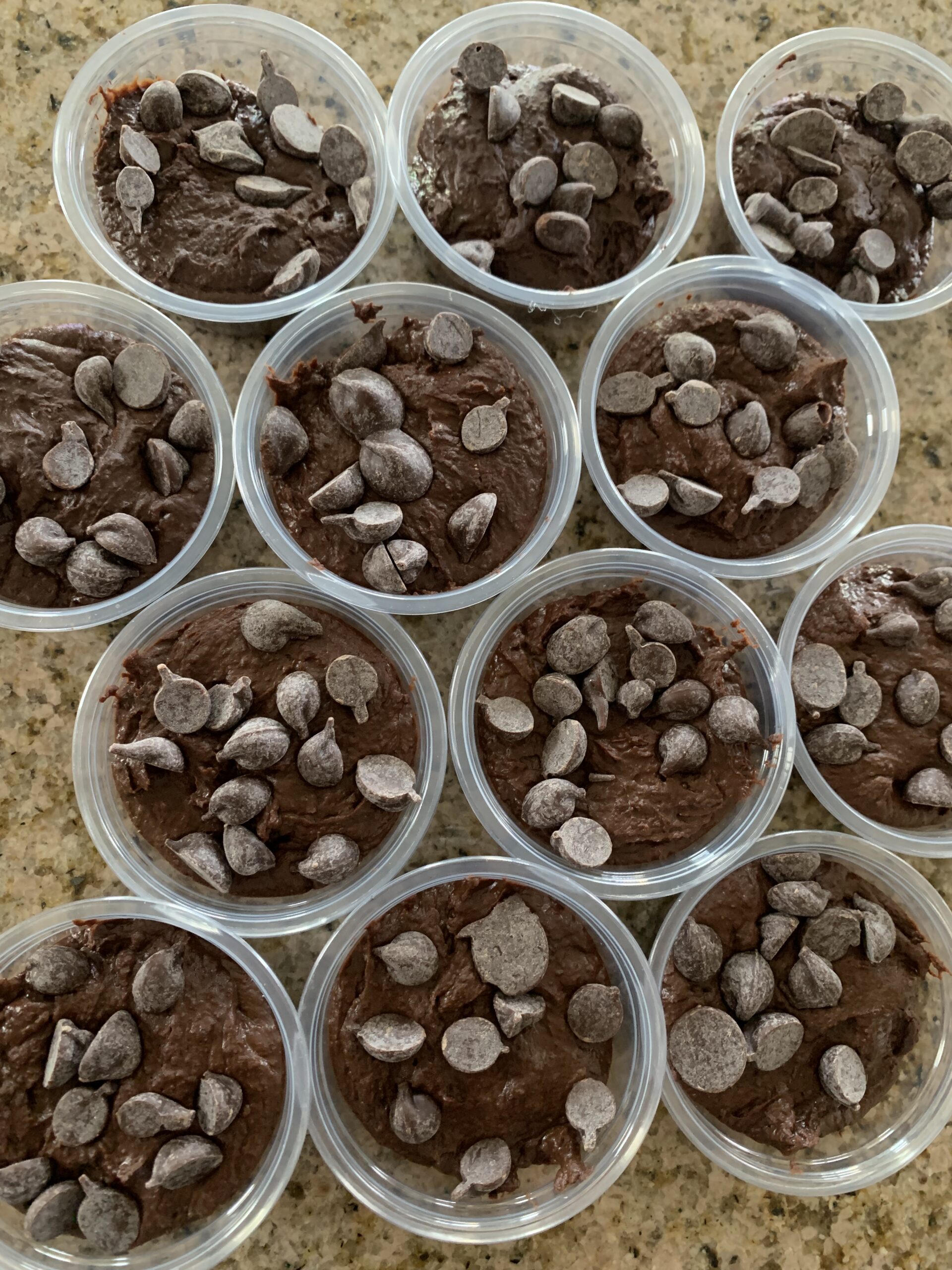
Evenly fill the mini muffin tin and tap pan to remove air bubbles.
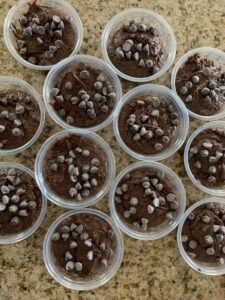
Optional: Sprinkle with chocolate chips.
Bake for 20-25 minutes or until the tops are dry and the edges start to pull away from the sides.
Remove from oven and let cool for 30 minutes before removing from pan. Remove gently because the insides are meant to be fudgy.
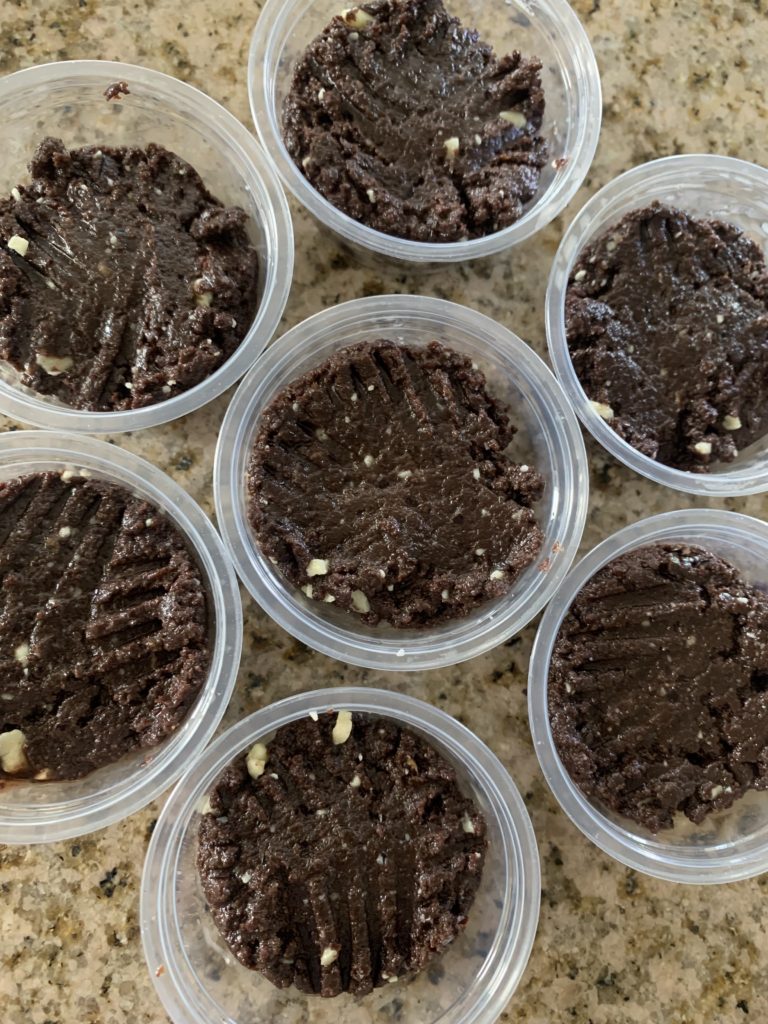
Optional to have this be a NO BAKE BROWNIE. Since there is no raw ingredients, you can individually separate portions and eat the batter plain or cook when you are ready for a hot brownie!